nowhere close to halfway does not offer neat resolutions. Instead, the eight films included in this program dwell in the ongoing attempt, the search, the still-unfulfilled—and, to varying degrees, the necessity of continually reaching for both what might be and what could have been. nowhere close to halfway holds within it a restless yearning that propels the program forward—an unresolved desire pulses through each of the films, manifesting as a longing for connection, family, home, nation, and self-determined futures.
In Eri Saito’s Social Circle, the narrator tries to make sense of her solitude through a critique of social pleasantries, such as the disingenuous invitation “When are we grabbing that drink?” while the audience gauges her story for signs of loneliness.
Offline Messages by Jia-chae Chang critically reflects on nostalgia through the tethers that bind one’s hometown across generations, cycles of colonialism, writers, and the filmmaking process, while Annie Sakkab’s غنينا قصيدة The Poem We Sang is dreamlike and steeped in nostalgia. Yet, its perfect memories fracture as moments of violence—both past and present—puncture the narrative.
In On and On and On, Evelyn Pakinewatik collapses time to share a prophecy by Elder Albert Ward. Alex Lo’s humorous film, Why Do Ants Go Back To Their Nest?, attempts to bridge an impossible distance—both spatially and temporally—in order to reach home. Meanwhile, Ayo Akingbade connects the dots between New York and London, trying to bring a dream to life in her most recent film, Keep Looking.
Mona Benyamin introduces us to the Lunar Embassy and the possibilities it might hold in Moonscapes, while We Are Not Alone, a film by Adebukola Bodunrin, explores an unlikely partnership born out of necessity after aliens make their presence known to Earthlings, and closes with an invitation: “Do you have beer?”
The film program nowhere close to halfway, with a title borrowed from Why Do Ants Go Back To Their Nest?, suggests both overwhelming distance and anticipates a possibility of togetherness. The works presented in this screening resist closure while acknowledging sites of connection in the wavering dislocation of exile and forced migration, the shifting terrain of language and communication, and the search for meaning in the spaces between you and I.
Program Details
Friday, April 11, 2025
—
Curated by Jaclyn Quaresma
—
Work by Ayo Akingbade, Adebukola Bodunrin, Alex Lo, Annie Sakkab, Eri Saito, Evelyn Pakinewatik, Jia-Chae Chang, Mona Benyamin
—
Images Festival, Toronto
Co-Presented with Toronto Reel Asian Film Festival, Black Women Film! Canada
Program Schedule
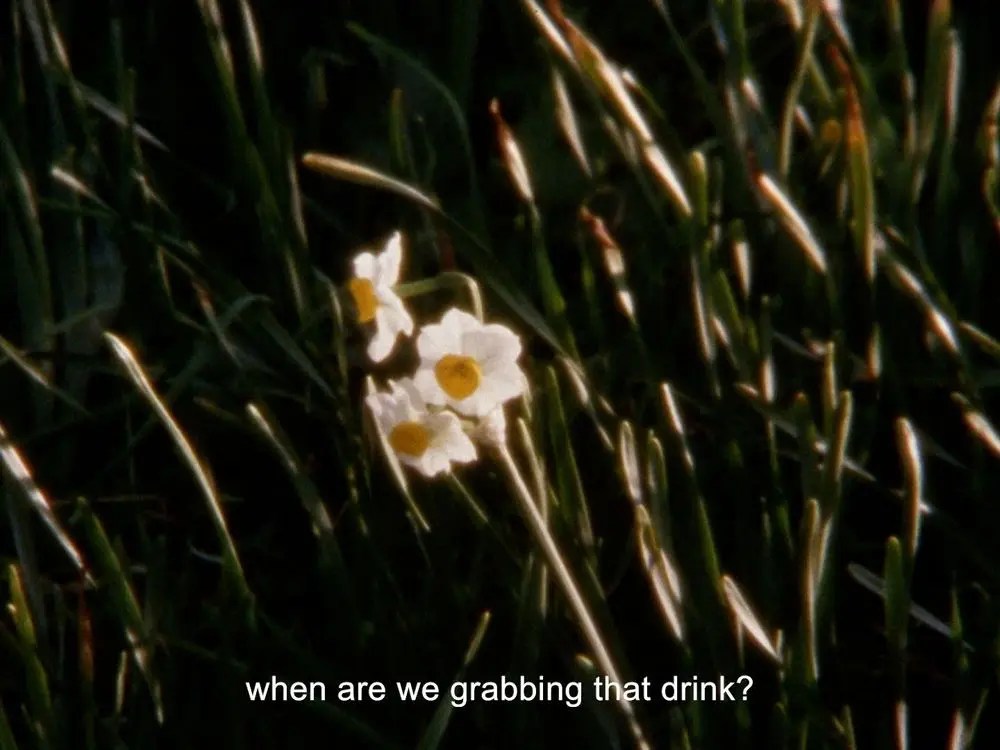
Social Circles, Eri Saito, 2023. Japan | Digital | 16 min | English and Japanese.
Social Circles explores the unique dynamics and communication that arise from the ad inability to fully connect and understand each other. In our daily lives, we form various social circles through interactions with friends, acquaintances, colleagues, and family. Contemplating the faint boundaries that emerge from individual communication sparks thoughts about how we might otherwise interact with one another.

Offline Messages, Jia-Chae Chang, 2023. Taiwan | Digital | 15 min | Chinese and English.
Weng Nao, Jin Lian, and Qiu Miaojin each share a hometown with Chang, the filmmaker. Having grown up in Changhua City, Taiwan but in different generations, each have different contexts for modernity and each capture their own dislocated marginal positions as “the Other”, having faced multiple intersections while searching for their own identity. This work attempts to bring literature into the moving image while contemplating the connections between these differences.
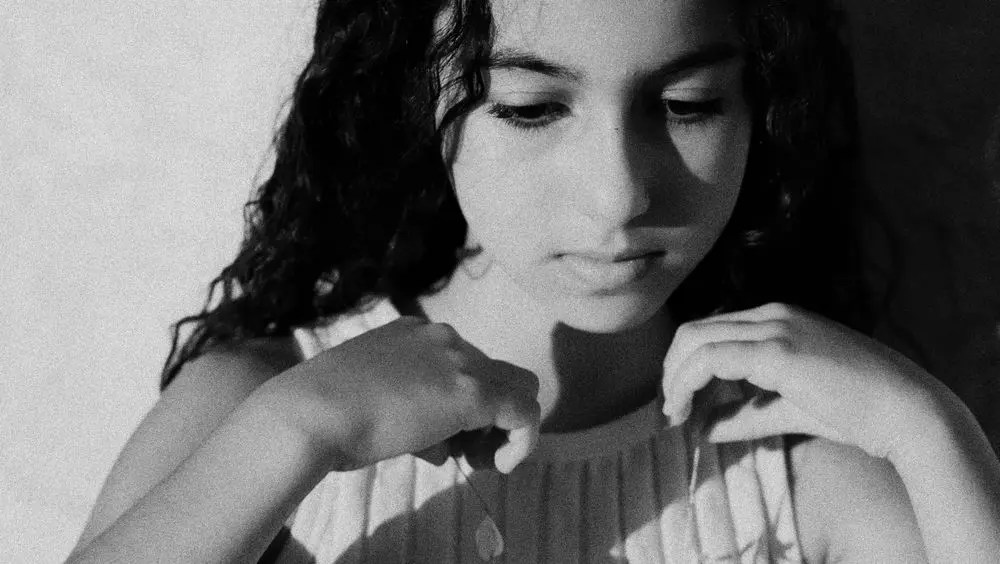
غنينا قصيدة The Poem We Sang, Annie Sakkab, 2024. Canada, Jordan, Palestine | Digital | 21 min | Arabic with English subtitles.
غنينا قصيدة The Poem We Sang is a meditation on family love and longing for home. It centres on an old audio recording in which my uncle Elias was telling my brother how our family had to flee from the bombing in 1948 and run away from our family home at Al Baq’a neighbourhood in Jerusalem, Palestine, without personal belongings, thinking the family would return home in a week’s time. Years later, when my grandmother finally did return to the family home with my uncle, just after the 1967 Six-Day War, her home was occupied by settlers.
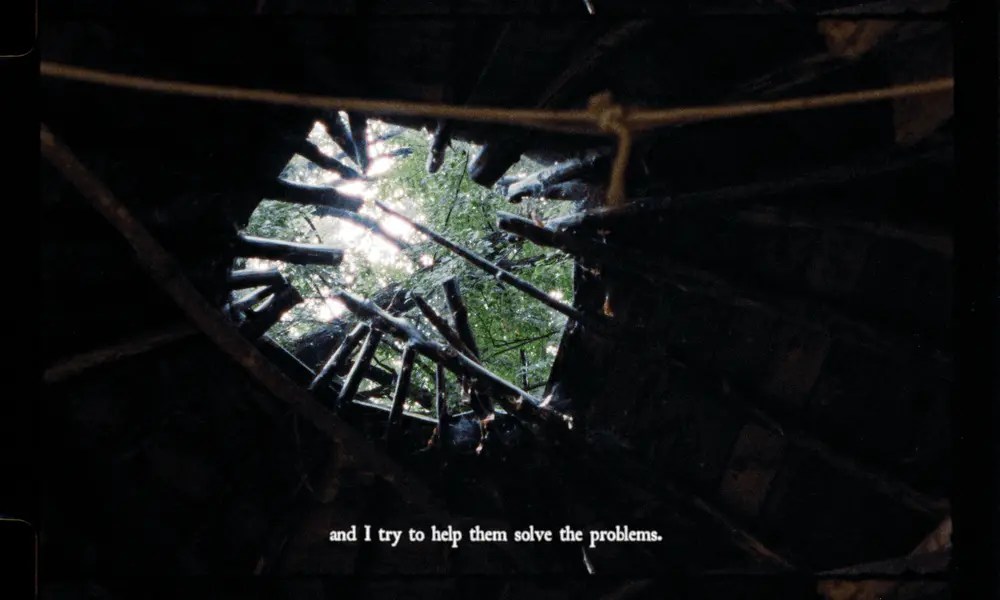
On and On and On, Evelyn Pakinewatik 2024. Canada | 16mm to Digital | 11 min | Mi’kmaq and English with Mi’kmaq and English subtitles.
Albert Ward was a highly regarded Mi’kmaq Elder from Eel Ground First Nation and a very dear friend and teacher to my family. This recording was the last time we spoke to him, and the first time I had met him since infancy. On and On and On was filmed during the pandemic, on the sacred ceremonial lands of my home territory, following the pathways and protocols specific to my family and to myself as a disabled artist.
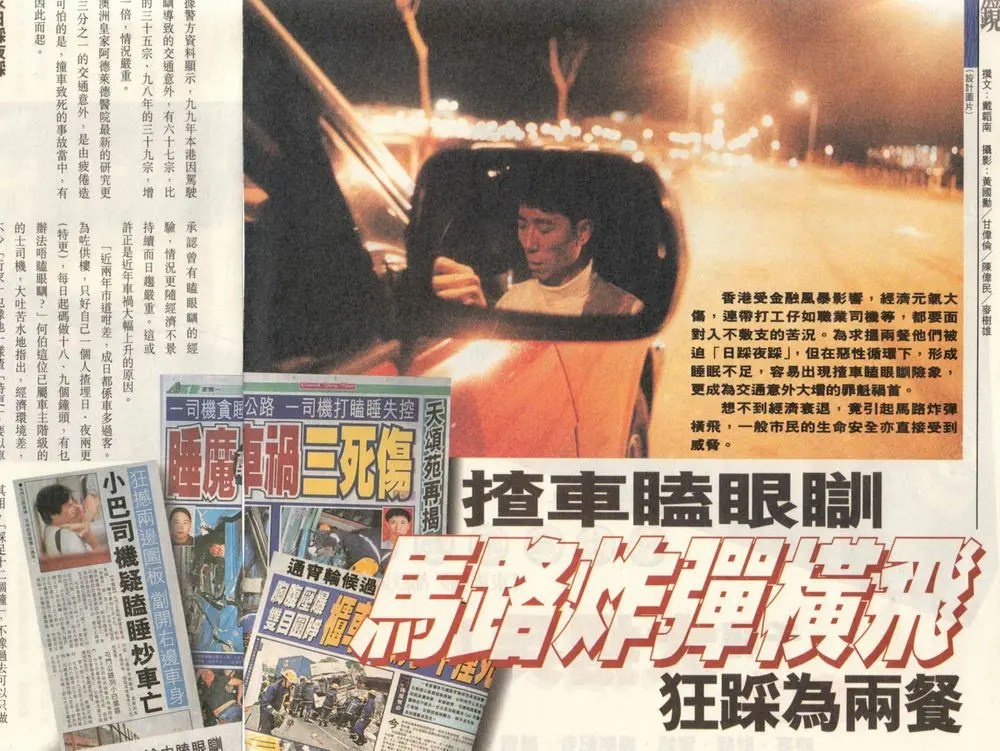
Why do ants go back to the nest? Alex Lo, 2022. Canada. Digital | 13 min | English.
An experimental, auto-fiction film about the filmmaker digging a hole from Toronto to Hong Kong.
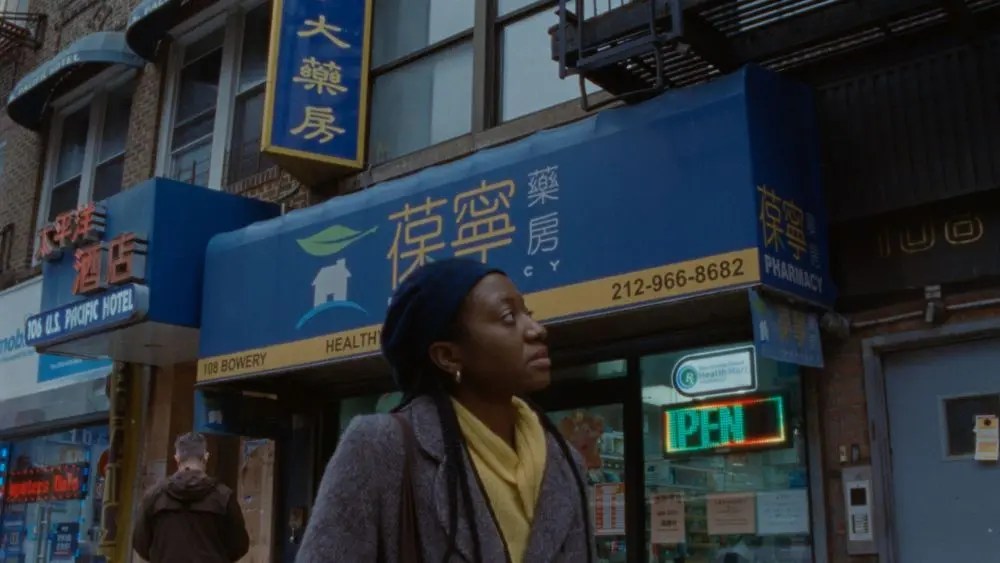
Keep Looking, Ayo Akingbade, 2024. United Kingdom, United States | Digital | 15 min | English
A young filmmaker arrives in New York to find finance for an impossible feature.
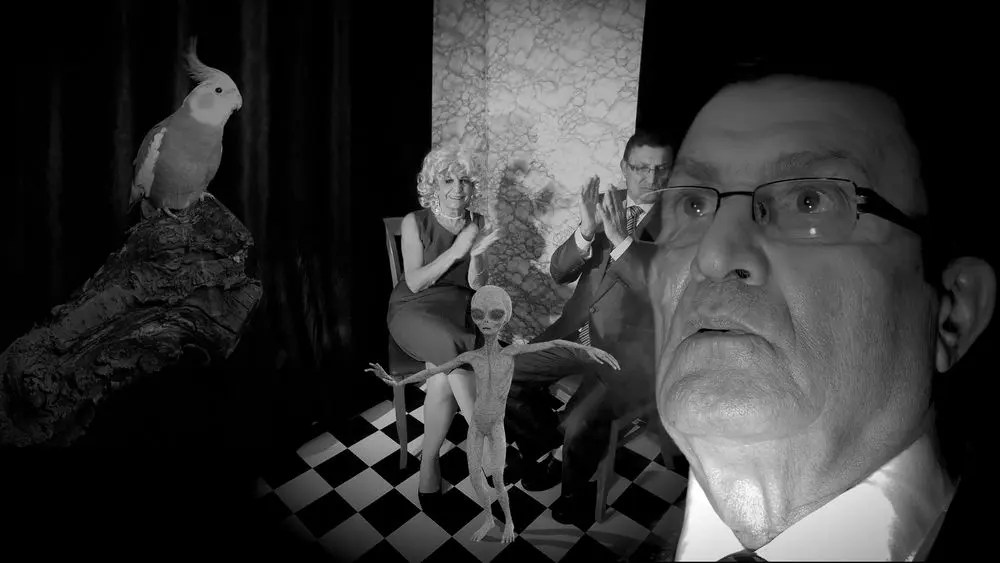
Moonscapes, Mona Benyamin, 2020. Palestine | Digital | 18 min | English
Moonscape is a short film which takes the form of a music video for a ballad. The song traces the story of a man called Dennis M. Hope, who claimed ownership of the Moon in 1980 and thus founded the Lunar Embassy – a company that sells land on a variety of planets and Moons, and makes a connection between his story and that of the director’s – a young Palestinian woman living under the Israeli occupation, longing to end the misery of her people in any way possible.
We Are Not Alone, Adebukola Bodunrin, 2023. Canada, United States | 16mm to Digital | 11 min | English
Wunmi, a reclusive young Nigerian immigrant, becomes convinced that a mysterious object approaching Earth’s orbit holds the key to her loneliness. Determined to decode the alien signal, she enlists the help of Jenny, a stranger. Adapted from the short comic by award-winning graphic novelist and screenwriter, Ezra Claytan Daniels, We Are Not Alone is a lo-fi sci-fi tale shot on salvaged and laser-etched Ektachrome stock.

Ayo Akingbade
Ayo Akingbade is an artist, writer and filmmaker. Through her films and installations, she addresses themes of power, urbanism and stance. Her work has often documented experiences of rapid social and political change in London, where she was born and raised.
Adebukola Bodunrin
Director Adebukola Bodunrin is a Nigerian-Canadian film and video artist whose work has been featured at SXSW, IFFR, Images Festival, Anthology Film Archives, BFI, REDCAT, MCA Chicago, Festival Animator, the Black Cinema House, and is in the permanent collection at the Whitney Museum. Her work on KCET’s “Lost LA” series earned her an LA Area Emmy for segment direction. We Are Not Alone marks her first venture into live-action filmmaking.
Alex Lo
Alex Lo is a Toronto-based filmmaker born in Hong Kong. His work explores themes of geo-identity and isolation through alternative modes of narrative such as auto-fiction and experimental documentary. His newest works further expand on the experimentation of process and method, diving into slow cinema, slice-of-life, and first-person documentaries.
Annie Sakkab
A Palestinian-Jordanian-Canadian, Annie Sakkab is an independent filmmaker and photojournalist. She seeks long-form narrative with a focus on women’s issues, identity, and social justice. Her first short documentary Hollie’s Dress had its World Premiere at Hot Docs Canadian International Documentary Festival 2020 and was created in collaboration with The Canadian Broadcasting Corporation (CBC). Her second short experimental documentary, The Poem We Sang examines Intergenerational trauma and post-memory in the context of Palestine.
Eri Saito
Eri Saito is a Japanese artist born in 1991 in Fukushima and presently living and working in Tokyo. Focusing on video, she creates works focused on such invisible and uncertain dynamics as memory and cognition. In 2024, she received the Second Prize at the e-flux Film Award.
Evelyn Pakinewatik
Evelyn Pakinewatik (Nbisiing Anishnaabe/Irish, Nipissing First Nation) is a filmmaker and multidisciplinary artist. Evelyn’s work explores the intersection of dreams and memory, and the societal distortion of interiority, relationality, and animacy. An artist raised by artists, Evelyn began working alongside their parents from a very young age to preserve and disseminate traditional textile and nature arts in Indigenous communities across Ontario and Québec. Evelyn is a 2018 Reelworld E20 Fellow, 2019 4th World Media Lab Fellow, a 2020 HotDocs Doc Accelerator Fellow, and a 2021 EFM Doc Salon Fellow.
Jia-Chae Chang
Jia-Chae Chang is a filmmaker and visual artist currently based in Leipzig. With an extensive background in calligraphy and ink painting, he then studied contemporary art in Leipzig and Vienna, where his direction shifted towards working on film and video installation. Recent exhibitions include: “2022 Taiwan Biennial” (National Taiwan Museum of Fine Arts, Taichung), “Radical Forms of Writing” (Hong-gah Museum, Taipei, 2017) and “The Gaze of Singularity” (Art Stage, Singapore, 2017).
Mona Benyamin
Mona Benyamin b.1997, Haifa, Palestine; lives and works in New York.
 Jaclyn Quaresma
Leave a comment