Program Details
Wednesday, December 13, 2023
—
Curated by Jaclyn Quaresma
—
Work by Alaa Abu Asad, Ulufer Çelik, Serene Husni, Nour Bishouty, Razan AlSalah
—
Ace Hotel, Toronto
Images Festival, Toronto
—
Content Warning: Please note that Heim Frost contains classist, homophobic, racist, and sexist dialogue.
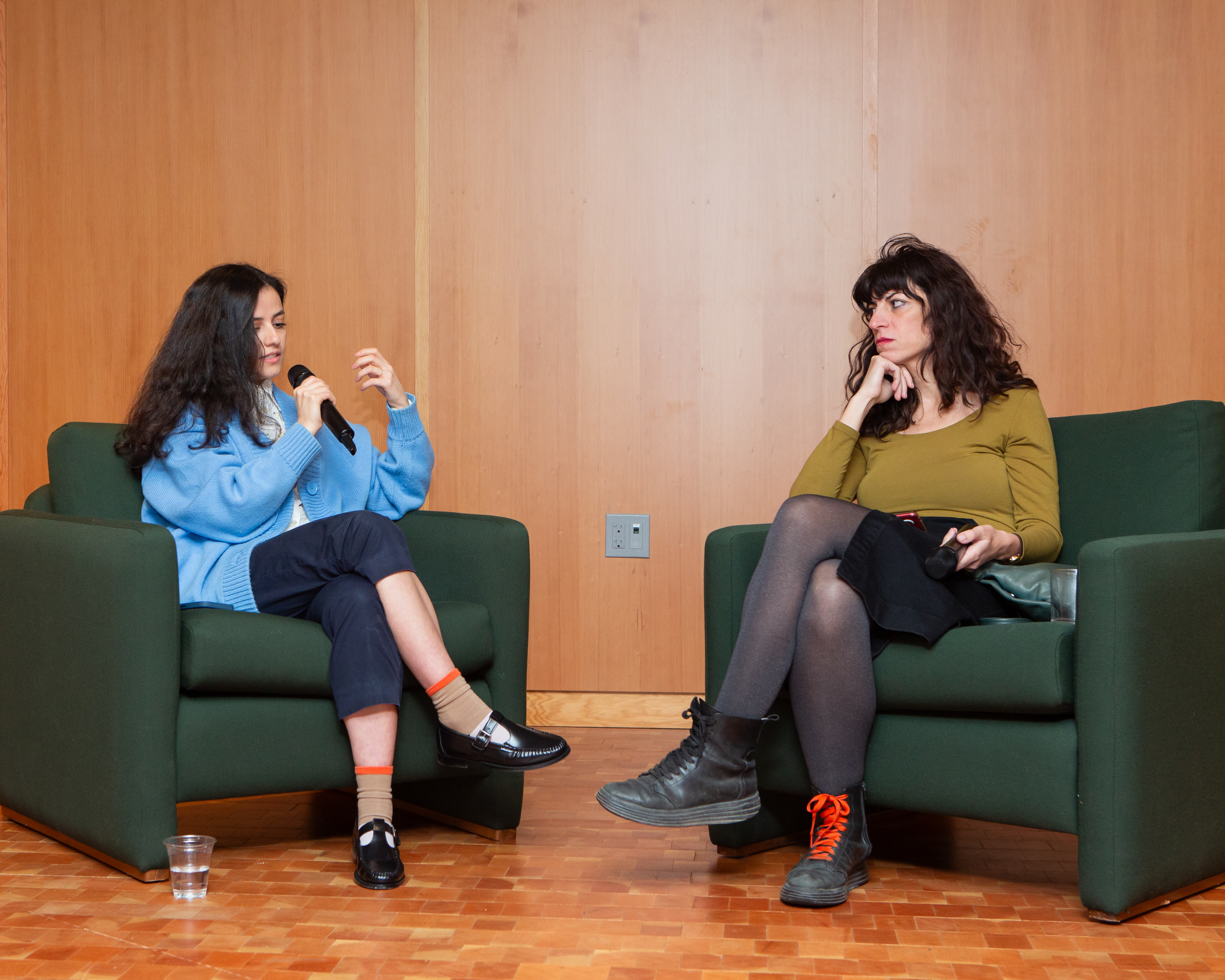
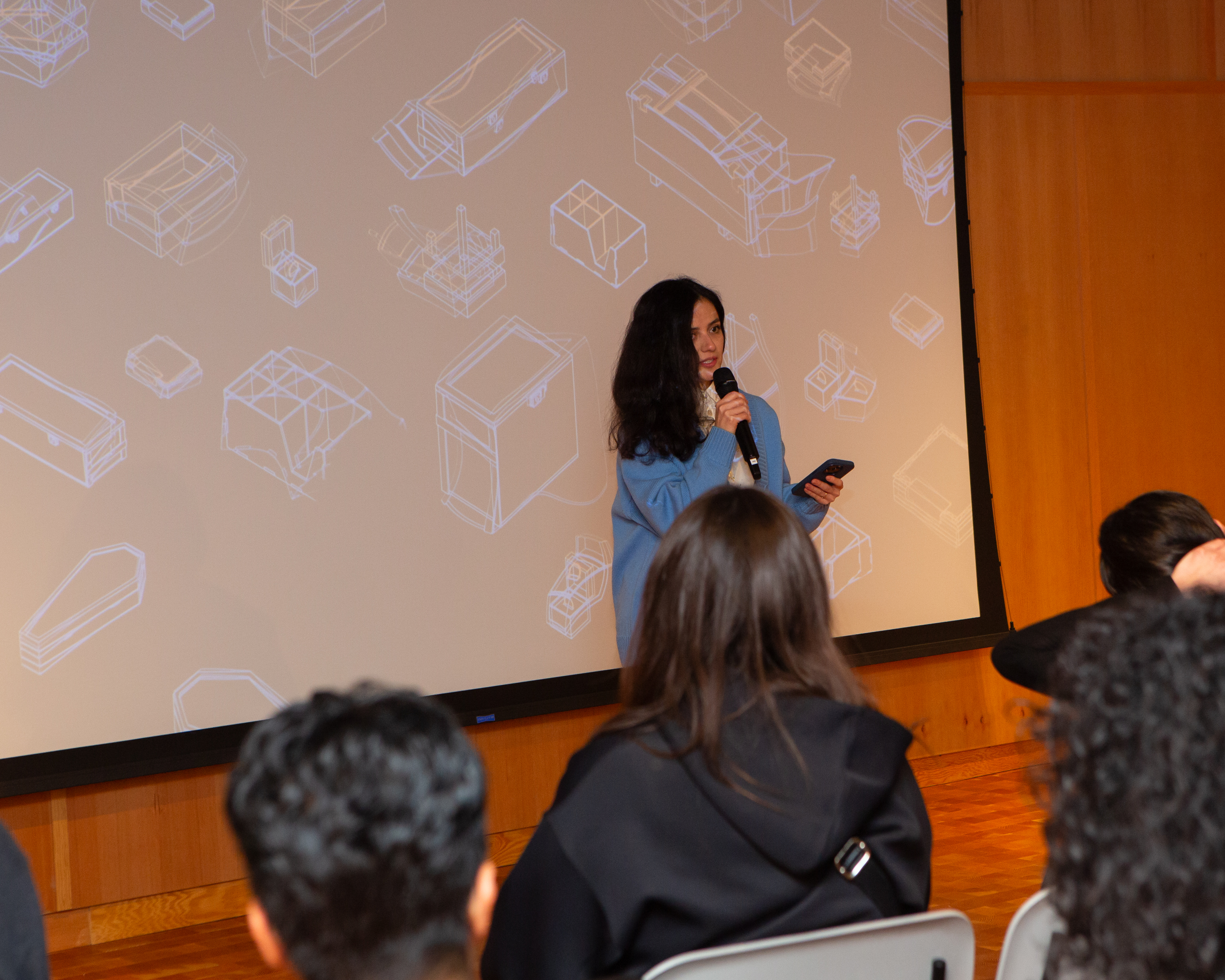
Following the screening, a public conversation will be held between artists Serene Husni and Nour Bishouty accompanied by a Q&A with the audience.
—
Documentation by Clea Christakos-gee
—
This program was presented as part of a yearlong partnership between Ace Hotel and Images Festival. Four artists have been invited to participate in quarterly, month-long residencies at the hotel followed by an exhibition of their work. The residency takes place under the theme of (g)host, extending the 2023 festival’s central inquiry and foregrounding moving images to contend with ideas at the intersection of archives, spirit, care, and hospitality.
For All Things Spoken and Unwritten borrows its title from the digital performance by Ulufer Çelik and Alaa Abu Asad that opens this program. The compilation of moving images assembled under this title consider the power of voice and subjecthood while playing with the mischievous potential of storytelling, translation, and interpretation as either content or methodology.
I love it when translation can be found to agree with our weird desires is a recorded digital performance and accompanying publication by Ulufer Çelik and Alaa Abu Asad. In it, the artists volley common Palestinian Arabic and Turkish Arabic words, passing them back and forth searching for resonance and communion between their similar but distinct dialects. At times, the words are so similar only a honed ear can tell them apart. At others, meanings are linked together yet vary greatly. Still others are nothing alike. Through a series of stories, Alaa and Ulufer present the role cultural context has in defining meaning beyond the spoken word, illustrating how tricky language can be.
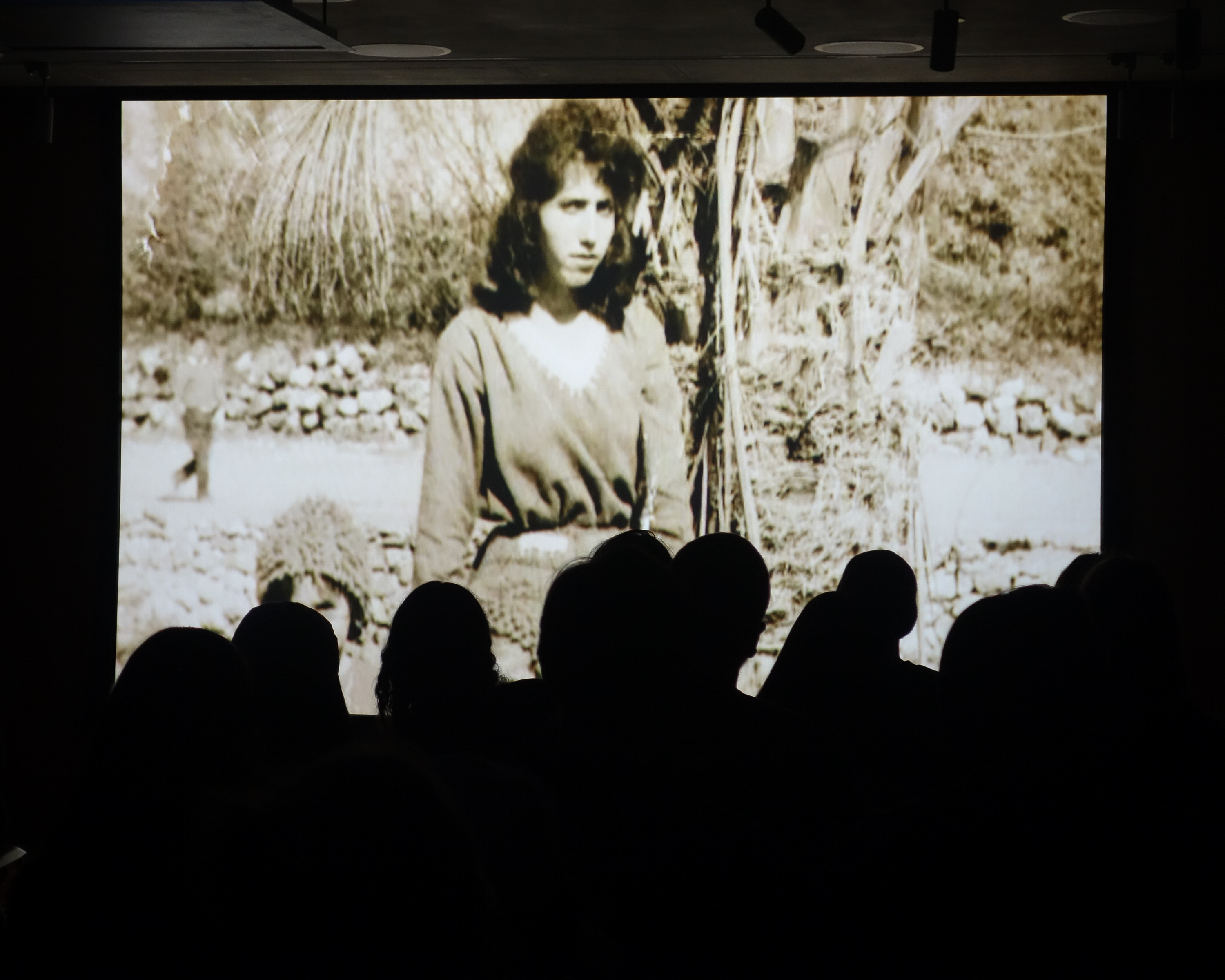
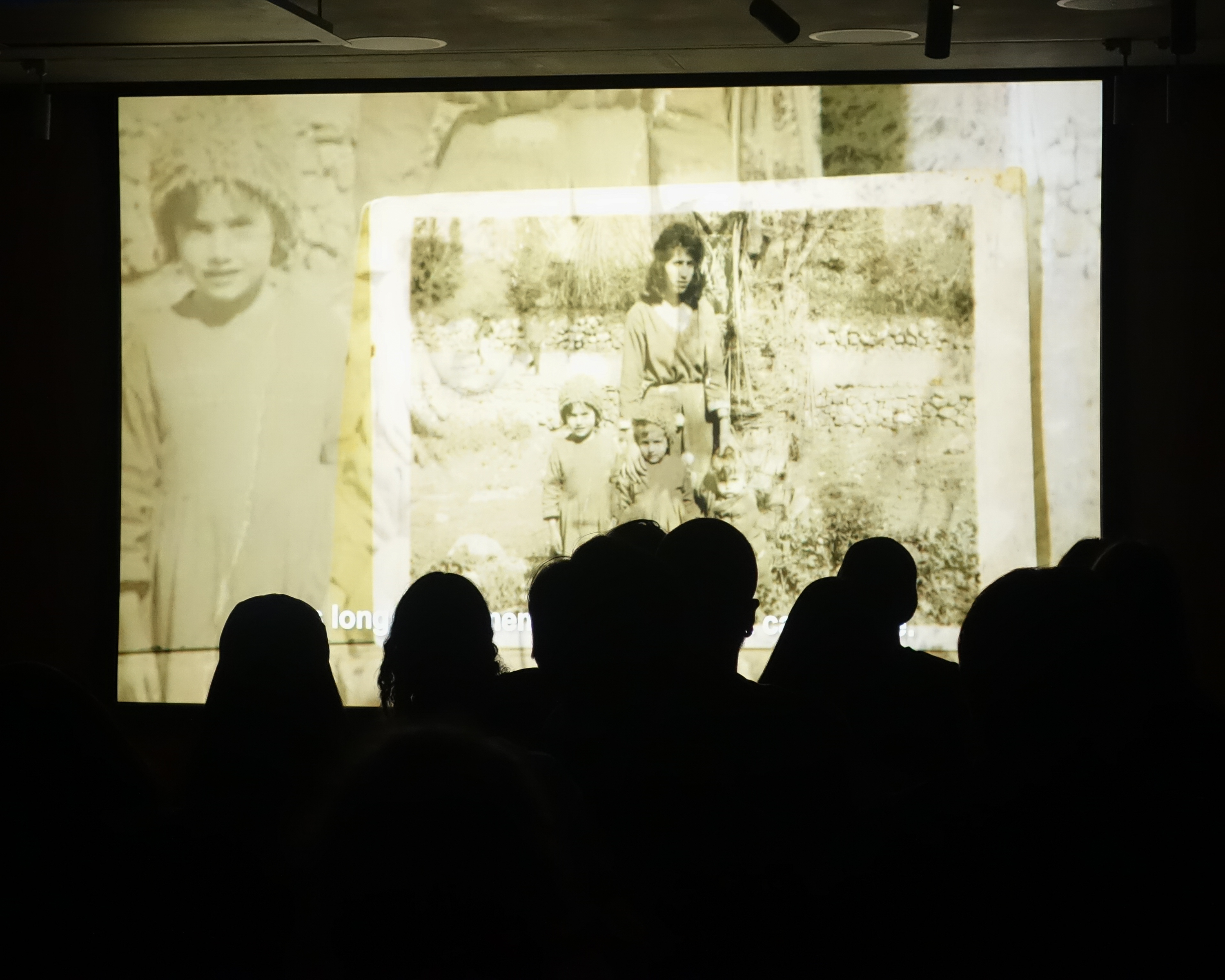
Serene Husni’s short film Brown Bread and Apricots centres her Uncle Hammoudeh, who tells the story of his years as a troublemaker. Instead of punishing him, his family confers, and decides to trust Hammoudeh with managing their allowance. As he tells it, at 13-years-old and despite the absence of his elders, he relied on the comfort that “in a Palestinian house, the pantry is never bare.” He frugally satisfied the bare necessities of his siblings while consistently enjoying his favourite treat. In this film, the trials and treasures of living in the Palestinian diaspora are subtly unfurled through the sharing and retelling of core memories, first by Hammoudeh, and then by Serene.
For All Things Spoken and Unwritten also includes the work of Nour Bishouty, the current Images x Ace Hotel Artist in Residence. Her video Heim Frost was recorded during the Twenty-three Days at Sea Residency with Access Gallery Vancouver. It assembles scenes of day-to-day life aboard a freighter and includes the passing and unembellished anecdotes of Johannes Elmar Streicher. As an artistic gesture, Nour herself chronicles the self-assigned chronicler of the ship, Second Commander Streicher.
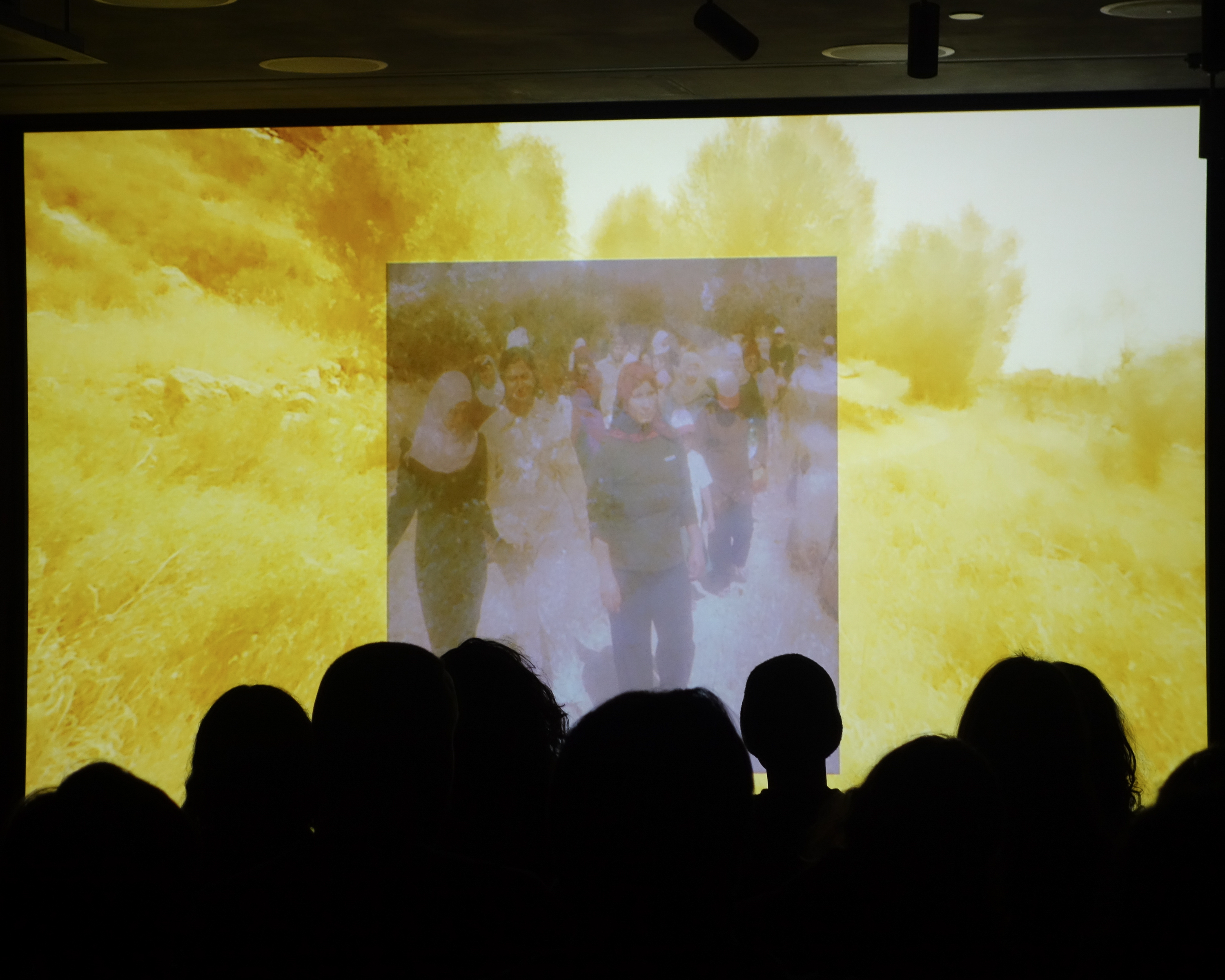
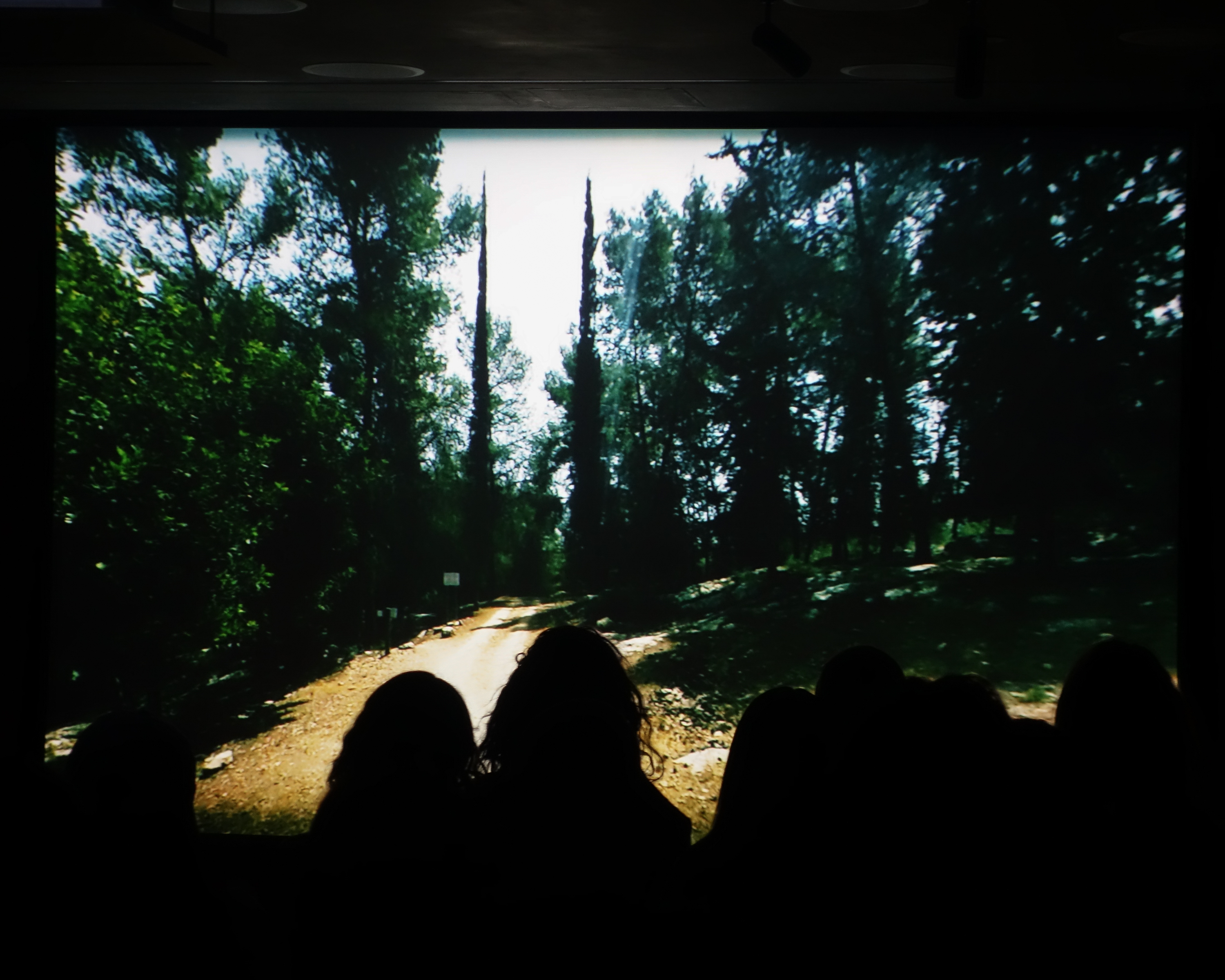
In the experimental video poem Canada Park, Razan AlSalah takes viewers through the undercommons– a potential place where demolished, historic Palestinian sites may still be thriving. An eerie funhouse-like score by London-based musician, producer, and DJ Nabiha Iqbal is the backdrop to Razan’s mythic story. Told from the perspective of an all-seeing eye and using Google Maps along with 20th-century colonial landscape photography, the filmmaker geographically and ideologically locates what she calls the site of a “self-fulfilled scriptural and algorithmic prophecy.” In this work Razan creates a counter-mythology rooted in the 2007 March of Return to Latroun.
The artists and filmmakers presented in For All Things Spoken and Unwritten explore a potent understanding of mischief, youthful and resilient in spirit. This screening asks, might mischief be a tool to subvert—as opposed to support—dominant narratives? What social and ideological tensions can mischief reveal? Is it possible that the disruption caused by mischief could aid in liberatory thinking? How might it fall short? And what might generative mischief look like?

Program Schedule

I love it when translation can be found to agree with our weird desires, Alaa Abu Asad, Ulufer Çelik, 2017 (ongoing) | Digital Performance | 14 MIN | Arabic, English.
Do you know what şemsiye means? Do you use the word kırbaç for a whip? For around three years, we have been asking each other about identical words used in both of our languages: Turkish and (vernacular) Palestinian Arabic. It is a process that can last for good – as long as our friendship lives. We spend time together uttering words that are held in common and draw them, discovering whether they carry the same meaning, are slightly different, or are false friends.
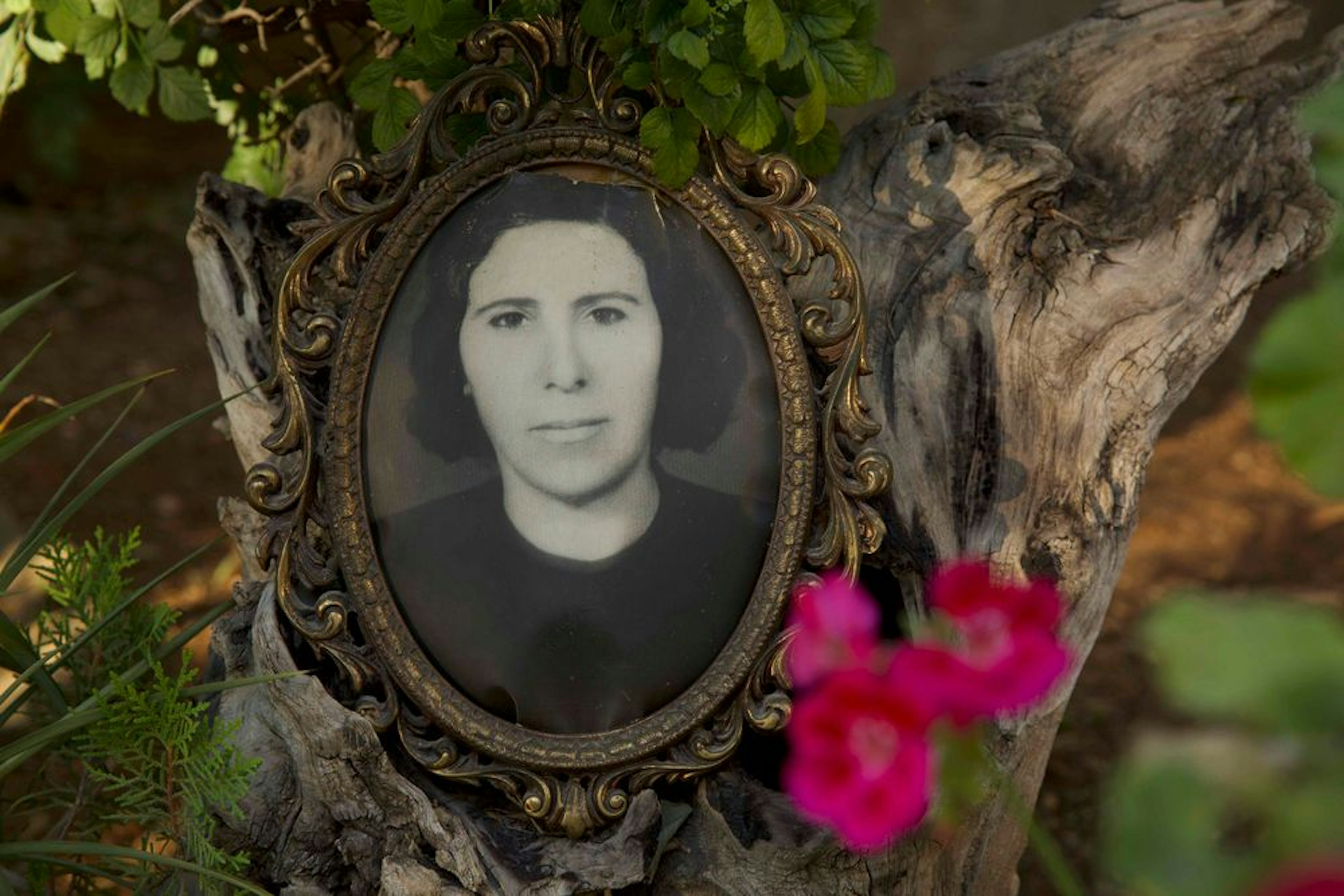
Brown Bread & Apricots, Serene Husni, 2020 | 8 MIN | Arabic with English subtitles.
Serene Husni’s film Brown Bread & Apricots talks about the importance of the pantry in her father’s exiled Palestinian family. The film won the Qayrub Award for “Best Canadian Short Film” from the Toronto Arab Film Festival in 2022.
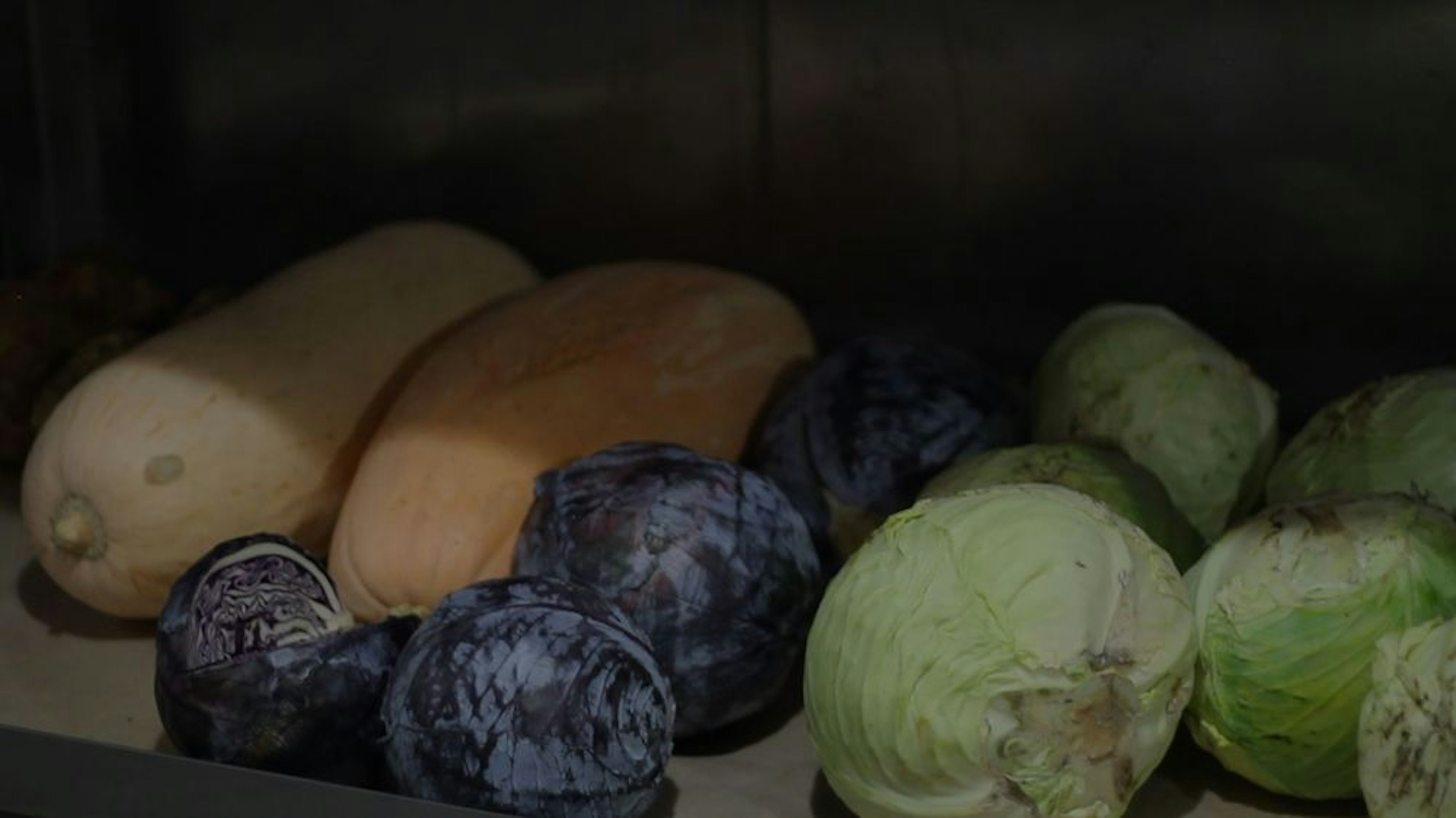
Heim Frost, Nour Bishouty, Canada | 2016 | Digital | 26 MIN | English with English subtitles.
Heim Frost is a two-channel video shot in the summer of 2015 aboard the trans-pacific freighter, Hanjin Brussels, during its voyage between Port Metro in Vancouver to the Port of Shanghai. The video assembles scenes of day-to-day life aboard the freighter foregrounded by the passing and unembellished anecdotes of Johannes Elmar Streicher during his position as Second Officer there. The video explores the role of the self-assigned chronicler—a twofold presence here—beyond “the big event, the untoward, the extra-ordinary” (Perec). A sense of behind-the-scenes is contrasted with the mundane details and seemingly trivial moments of the arduous and isolated life at sea.

Canada Park, Razan AlSalah, Canada | 2020 | Digital | 8 MIN | Arabic and English with English Subtitles.
Surreal imagery from Google Maps, Wikipedia and 20th century colonial photography are combined in this experimental film essay on the erasure of Palestinian history and presence. Canada Park uncovers the territory of Imwas, a village cited in the Old Testament that was razed by the Israeli Defence Forces and replaced by Canada Park. Transporting the viewer into a field of the uncanny, the other-worldly sensation of Canada Park is underscored by the esoteric soundscape of London-based musician, producer and DJ Nabiha Iqbal.
Alaa Abu Asad (عَلاء أبو أسعد) is an artist, researcher, and photographer. His practice is centred around developing alternative trajectories in which values of (re)presentation, translation, viewing, reading, and understanding can intersect. Language and plants are main themes in his research–based work, which takes form in writing, film and interactive installations.
Nour Bishouty is an interdisciplinary artist working across media including video, sculpture, works on paper, digital images, and writing. Her work engages with histories and narratives of place and poses questions around dissonance, opacity, legibility, and the generative possibilities of misunderstanding. Bishouty’s work has been exhibited in Canada and internationally including at Gallery 44 Centre for Contemporary Photography, Toronto (2022); the Museum of Contemporary Art, Toronto (2021); Darat Al Funun, Amman (2017); Casa Arabe, Madrid (2016); Access Gallery, Vancouver (2015); the Mosaic Rooms, London (2015); and the Beirut Art Centre, Beirut (2014). Her artist book 1—130: Selected works Ghassan Bishouty b. 1941 Safad, Palestine — d. 2004 Amman, Jordan, edited by Jacob Korczynsci, was co-published in 2020 by Art Metropole (Toronto) and Motto Books (Berlin). Upcoming exhibitions include La biennale de Québec (Feb 2024).
Razan AlSalah is a Palestinian artist investigating the material aesthetics of dis/appearance of places and people in colonial image worlds. Her work has shows at Art of the Real, Prismatic Ground, RIDM, HotDocs, Yebisu, Melbourne, Glasgow and Beirut International, Sharjah Film Forum, IZK Institute for Contemporary Art and Sursock Museum. Razan teaches film and media arts at Concordia University.
Serene Husni is a Palestinian-Jordanian filmmaker and multimedia journalist with years of experience creating short documentary films and videos. Her directorial debut Zinco won the Audience Award for Best Documentary from the Franco-Arab Film Festival in 2013. Zinco is a visual study of the construction material used in building Palestinian refugee habitats. Set in the Talbieh Refugee Camp in Jordan, the film looks for visible manifestations of displacement.
Ulufer Çelik (b. 1992, Antalya/ Turkey) is an artist, who lives and works in Rotterdam, Netherlands. She completed her studies in the MA Art Praxis program at the Dutch Art Institute in 2018. Her artistic practice explores the potentialities of narrative and myth-making, that is expressed through moving image, poetry, drawing, sound and performance. In her work, she constructs on multi-layered planes through a non-linear perception of time. She searches for queer, immigrant, feminist ways of making and thinking with the archeological, spiritual and spatial traces of memory.
 Jaclyn Quaresma